The Catalogue of Cities That Were Only Ever Described: forty-one entries, one letter withheld from each
Forty-one invented cities. Each entry is written without the first letter of its city's name, and the order of the entries carries a love story and a verdict.
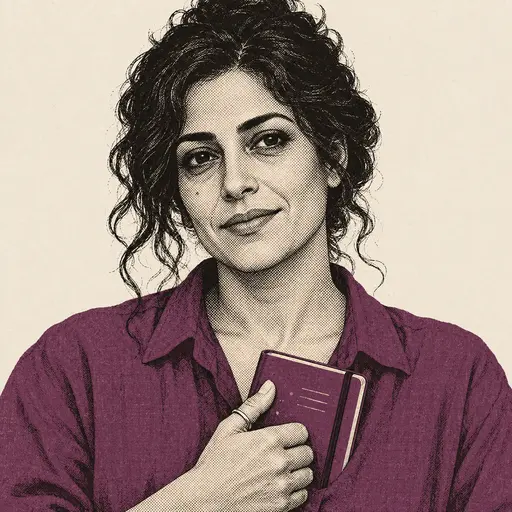
Form: a catalogue of forty-one cities. Each entry withholds one letter of the alphabet, and the letter is not chosen at random.
1. Zubrak
Here the streets are measured in the length of a recited poem: the baker lives three couplets from the well, the well lies a full ode from the gate. Strangers who do not know the poems get lost, and are guided by children who chant until the stranger arrives. A merchant once paid for a map of the city. He was handed a book of verse.
2. Vellamar
Each roof carries a cistern, and each cistern holds the roof that sits on it, upside down, so that from the hill the city appears twice: once in tile and once in water. The water city is said to be older. Its tax is paid in mirrors. At the harbour, those who sell descriptions of it charge by the reflection.
3. Kharrub
Carob trees line the streets of this city, and each pod holds seeds so even in weight that the jewellers use them to measure gold. Nobody owns anything outright. The whole city is pledged to the city upstream, which is pledged to the sea. When a debtor cannot pay, she is allowed to describe what she would have bought, and a good description settles a third of the sum.
4. Jibal
A city built on a staircase so long that the people at the top and the people at the bottom speak different languages. Interpreters live on the middle landings. They are paid by both sides and trusted by neither, and when they marry, they marry each other, and their children speak a third language no one has asked for.
5. Wazna
Each thing sold is put on the scale once, then again: first on the brass pans of the market, then on the conscience of the seller, kept in a locked room behind the customs house. The second reading takes longer. Ships at anchor sometimes rot before it is done.
6. Ushkar
Its gates face inward. They were made to keep the city from leaving, and on windy nights the walls creak like the sides of a ship, and the night watch leans against them with all its weight. In the morning the market is a few paces farther east than the day before. No map of it has ever been correct for more than a week.
7. Barzakh
A city on a strip of land so narrow that a child can throw a date pit from one sea to the other. Half the houses face the morning sea, half the evening one. Families on the two sides do not quarrel; they simply cannot see each other's windows. A traveller who stays a night on the ridge is said to wake up owing something to each side.
8. Qandil
A city of lamp-makers, where it is never fully dark and never fully lit. Every household keeps one lamp for reading and one for being seen. The second is brighter. At the end of a year the lamps are counted, and the household with the dimmest reading lamp is honoured, because someone there has been reading very late, very close to the page.
9. Marjan
Coral grows on the harbour wall faster than the city can scrape it off, and the oldest streets are now under the sea, still lit, still paved. Divers bring up shoes, ledgers, a child's slate with half a line of figures. Nobody asks for these things back. They are sold at auction to strangers, who take each piece to a city that does not exist and say they found it there.
10. Ghadir
Three merchant fleets set out for this city in one season, each with a description paid for at a harbour stall. The first found a reef. The second found a hamlet of salt-workers who sold them water. The third found only open sea and came back to say so, and was not believed, so that in the ports where its sailors drink, the city is now more famous than it was before anyone went to look.
11. Fanar
The lighthouse here is lit only when a ship is already on the rocks, so its keepers are less guides than witnesses, called to every inquiry. Asked in court whether a city sold to a sailor was real, one keeper said it was real enough to steer by. The judges are still deciding what that means.
12. Dallala
In this city the women who run auctions earn nothing from the wares, only from the patter. A pot is a pot; the story of the pot is worth six times its clay. The best of them can sell one empty jar three times in an afternoon, to three buyers, each of whom goes home happy with a jar that is not there. The best of the best is no longer here. Buyers ask after her.
13. Nisab
Here a verdict requires twelve judges to be awake at the same hour. This is rare. The court sits day after day; each judge sleeps a little while the others watch. Some of the accused married, had daughters, grew old at the back of the court, still free of a verdict. Lawyers say the safest plea is a story that keeps exactly half of the judges awake.
14. Lisan
Every word spoken in this city is written down by somebody. The scribes are not paid. They are men and women who cannot do otherwise. They sit by the fountains with ink on their cuffs and copy out the cries of the water-carriers, the bargaining, the oaths. At night they compare pages. Where two copies differ, the city is said to have two streets at that spot.
15. Rasif
A city that is all quay: stone steps going down into the black swell, coils of tow, gulls. No one lives in it. People only wait in it. The customs house has one window lit day and night, and behind it a young man copies into a book with a blue spine all that a woman in the next cell says to pass the time.
16. Hiwar
A city of two voices. Every street is a conversation: a question at one end, an answer at its far corner, a pause in its square. Lovers in it do not kiss; it is enough to stand at opposite ends of a long lane and speak along it. Nobody can say if a lane is a quarrel or a proposal until it is walked.
17. Tibr
Gold powder lies on every roof, every paving, every sill, so fine a breeze carries some off. Each evening sweepers bring back every grain blown away, so no one is ever richer or poorer. Only one person has ever carried any away: a woman who hid a pinch in her sleeve, and who now, in a cell by a harbour, rubs a finger across her palm while she speaks, so a young scribe across from her sees a glimmer and loses his place.
18. Sabil
Water here cannot be bought. On every corner, a fountain, and over each tap the name of a donor, now dead. A drinker will recite the name, and the dead are remembered in proportion to the heat. A clerk who did not drink all day, writing down what a woman told him, came out at dark and drank at every fountain on the way home, reciting each name, and could not remember one of them by morning.
19. Yaqut
A town that is nothing but an index. Its streets are named in alphabetical order, and a traveller can walk from the first letter to the last in a morning. Each house holds a single article. The houses of cities that never existed are the best kept, since no one comes to correct them, and the clerks there have the steadiest hands.
20. Ayn
In this city every door holds one grille, every grille one eye. No one knocks; one looks, is looked upon, opens or does not. Courtships here were conducted entirely through grilles, two eyes for months, the rest of the bodies only guessed. One scribe, in the customs house by the port, finds his eye drifting to the grille of the next cell, where the eye looking back is brown, then grey, depending on the light.
21. Iram
Of all towns, the one most spoken of and least seen. Every author counts the columns, and every count comes out at a new number. Sand keeps whatever the tellers drop. A woman held at the port of another town has told the young clerk at her door that she was born here. He wrote the words down, struck them out, then put them back.
22. Ostrakon
Each year the citizens smash their water jugs and scratch a name in the clay. The name with the highest tally is sent away. It is the kindest law they have: the exiled are asked first where they wish to be sent, and many are sent, at their request, to cities that are merely described. The ship that takes them never returns. This is said as praise.
23. Parvaz
A city of bells, one for each day remaining before something no one will name. Each dawn a bell is lowered from its tower and melted into nails. The towers grow lighter. The citizens, who once cursed the noise, now stand under the last ones at dawn with their hats in their hands. Eighteen are left.
24. Xenia
Here the law of guest and host is older than any other law. A stranger who knocks must be fed, then housed, then listened to. Only after the third night may a host ask the guest's name, and by then most hosts would rather not know it. A magistrate in a port far from here once sent a prisoner a pillow and a jug of water, and was dismissed for it. The clerk who carried them in was not, though he carried in more than the magistrate had sent.
25. Ghurub
As Kharrub, the third entry, but at dusk. The carob pods are darker. The debts are the same. Here, at the end of a debt, a debtor describes not what she would have chosen but the man who would have sold it to her.
26. Caesura
A town made of the pause between two lines of verse. Nothing is built here; everything is held. Its people are the breaths that singers take, and they are many, and they are short-lived, and they are the only thing the poems would die without. A woman who talks for her life learns to live in it the way a diver lives in her lungs.
27. Khatt
In this city a person's heart is read from the slant of their hand. Contracts are rejected for an unsteady alif. Marriages are arranged by comparing descenders. A scribe whose letters have begun, over many nights, to lean toward the right margin, toward a door, has been warned twice.
28. Jalsa
The court here sits in a garden, among lemon trees, and rises whenever a fruit falls, so that a case may last as long as a season is kind. Defendants bring their own ladders and, at night, tie the lemons on with thread. In spring the thread runs out.
29. Raml
The town is all sand. Its wise men and women lay out sixteen shapes in the sand each dawn and look at them a long time. The wind takes the shapes by noon, so a fate is valid only until midday. This is a kindness. A woman who asked the sand what the judges by the sea would decide was told to wait until the wind.
30. Ebru
A town of marbling. In all its yards stand vats of thick fluid, and on that fluid artisans drop ink, drag it into fans with a comb, and lay down a folio to catch a swirl that will not occur again. Law in this town works thus. No ruling is said aloud. Ink drops, a comb draws, a folio is laid down, and what it shows is final. On a morning in autumn a folio from such a vat was brought into a customs building by a port, and a woman in a small room with a bolt saw on it a ship. A copyist at that door saw only blots, and said so, and was not so much lying as hoping.
31. Firdaws
A garden city, walled, its water running in channels, one to each quarter, toward a pavilion in which
32. Layla
Nothing was dictated. The page is empty, and at its foot, in a different ink, the name has been written out again, as if to keep it warm.
33. Dar
A small town. It has one street, a well, a fig tree, a bench. I have not been there. I think it is a fine place to arrive in the evening. The people there ask a stranger nothing for three nights (see Xenia), then only her name.
34. Tin
Figs, mainly, and wasps, and a shallow well. I have never had her ear for places. I can say only: figs, wasps, a well, a bench where someone, by noon, will be glad of shade.
35. Bahr
This is not a city, I know. It is the water from here to wherever the ship goes. I am entering it since a catalogue of cities should have somewhere to put the distance. It has no streets. It has a route, which is the same thing said slowly.
36. Waraq
Paper here is made from the rags of old sails. A ship that has crossed the sea comes back, in time, as a ledger. If she is on the ship, then some day I may be copying onto her sail.
37. Mishkat
A niche in a wall, a light in the niche, a glass about the light, the glass like a star. That is the whole town. I keep it lit on the desk where the ledger was. It is the lowest light in the building, which in Qandil would be an honour.
38. Gharib
The town where a woman is headed. I have put in it the streets of Zubrak, the cisterns of Vellamar, the carob trees of Kharrub, the fountains of Sabil, and none of their debts. I have turned the walls of Ushkar to face out. No map of it will be correct for more than a week, which is the point.
39. Qalam
I have run out of cities. This is the pen, which is a city too if you live in it long enough: one street, very narrow, a black river down the middle, and at the far end a gate so fine that everything said here leaves by it.
40. Ziyara
A city at the far end of a long crossing, where ships come in with their sails patched in paper, so that on a windy day the harbour reads like an archive. Debts are settled here by description, as in Kharrub, and the rates are better. A woman keeps a stall by the water and sells descriptions of cities. Her newest is of a customs house, a blue-spined book, a lamp kept low. She charges nothing for it. Buyers ask whether the place is real. She tells them it is real enough to steer by.
41. Halqa
A port. A quay, a customs building, a room in it, a lamp on a desk. Far off across water, a circle of listeners in a public square, and in its middle a woman, talking. Coins fall at a talker's feet. Nobody is paid to stop. At dusk a ring of listeners breaks up as a ring of ink dries: from its outer edge inward, until only a point is left, still wet.
Afterword
I chose the form before the subject. Calvino's catalogue gives fifty-five cities to Marco Polo and lets Kublai Khan do the listening [1]. Perec's lipogram, in La Disparition (1969), gave up the letter e for three hundred pages, and in Gilbert Adair's English it took "the", "be" and "me" with it [2]. My rule is smaller and meaner. Each entry gives up the first letter of its own city, so no entry can say the name it is filed under.
The rule did more of the plotting than I did. I had planned for the verdict to fall in the thirtieth entry, and it fell under E. That meant I could not write verdict, sentence, judge, exile or free. What was left was a picture: a marbling vat, a comb, a ship in the ink. In Halqa, the last entry, the letter h took away he, she, her, his and the. So the two people the catalogue has been circling become "a woman, talking" and a lamp on a desk. With a free hand I would not have dared that ending; I would have written a sentence about longing. In Nisab I wanted eleven judges awake out of twelve and could not have "eleven". "Exactly half" is the better joke, and I only reached it because the obvious word was locked. In Rasif the r took "water", and the steps go down into "the black swell" instead, which is darker and truer. I nearly broke Yaqut with the word "city", which hides a y. The index in that entry is a town for that reason. The form decides.
Most of the names are dictionary words. Kharrub is carob, Rasif a quay, Tibr gold dust, Ghurub sunset, Mishkat the niche of the Light verse (Qur'an 24:35). Halqa is the Arabic for a circle, and it is also the name for the ring of listeners around a storyteller in Jemaa el-Fnaa, the Marrakesh square that UNESCO proclaimed a masterpiece of oral and intangible heritage in 2001 [3]. Only Zubrak, Vellamar and Ushkar are invented. Yaqut lends its name to the index-town because Yaqut al-Hamawi compiled, between 1224 and 1228, an alphabetical index of the place names in Arabic literature [4]. It is the nearest thing I know to a real catalogue of cities that were only ever described. Readers who count will find Iram, the city known only from accounts of it, at entry twenty-one of forty-one. They will also find that the bells of Parvaz match the entries still to come.
Now the concession. My working thesis was that the order of the entries, with no plot sentence, could carry the arc on its own. I could not make it do that, and I now doubt it can be done. Order without recurring nouns is a shuffle. The story is carried by a small set of objects that travel from city to city (a customs house, a blue-spined book, a cell, a lamp kept low, the phrase "real enough to steer by") and by the order in which they thicken. Several entries come close to narrating, Rasif, Tibr, Ayn and Iram above all. They stay inside a city's description, but a woman in a cell is a woman in a cell. The claim I can defend is narrower: no sentence stands outside a city, and the arc is the order in which the cities let in the same two people. This is Polo's confession turned into a structure: "Every time I describe a city I am saying something about Venice" [1].
The strongest objection is that a rule the reader never notices does no work for the reader. My answer is that it works the way a ruled page works. The lines vanish under the finished letter, but the letter is straight. Whether readers feel the arc before they see the rule is a claim about readers, though, and I have no evidence for it either way. If readers tell me they caught the missing letter by entry three and read the rest as a puzzle, the second half of my thesis is wrong, and I will say so. I would be pleased anyway. A reader who notices the missing letter is the reader this was written for.
Sources
- Invisible Cities (Wikipedia)en.wikipedia.org
55 cities, the Polo and Kublai frame, and Polo's line about Venice at the book's midpoint.
- A Void (Wikipedia)en.wikipedia.org
La Disparition (1969), 300 pages without e; Adair's 1995 English translation loses 'the', 'be', 'me'.
- Jemaa el-Fnaa (Wikipedia)en.wikipedia.org
Storytellers in the square; UNESCO proclamation in 2001, inscription on the list in 2008.
- Yaqut al-Hamawi (Wikipedia)en.wikipedia.org
Mu'jam al-Buldan, composed 1224 to 1228, an alphabetical index of place names from Arabic literature.